
Change is the only constant in the work environment today. However, a McKinsey study revealed that 70% of change programs fail, most often due to resistance from employees. For change to be successful, it has to be effectively managed. To achieve this, it is essential that the human side of change be addressed throughout the change process.

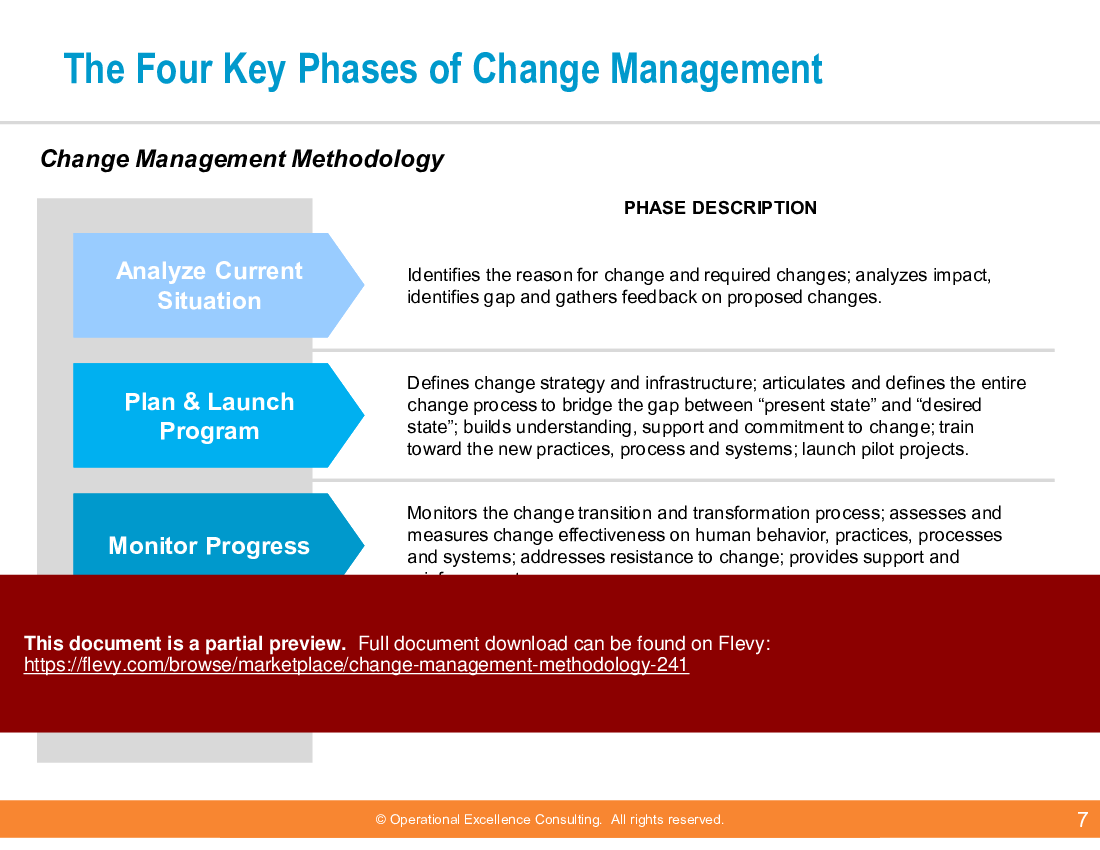
This comprehensive Change Management Methodology provides a step-by-step blueprint for change managers to successfully plan, implement and sustain change in their work environment. The Change Management process comprises four main phases: analyzing the current situation, planning and launching the program, monitoring progress, and evaluating effectiveness. The descriptions of the four phases of Change Management are as follow:
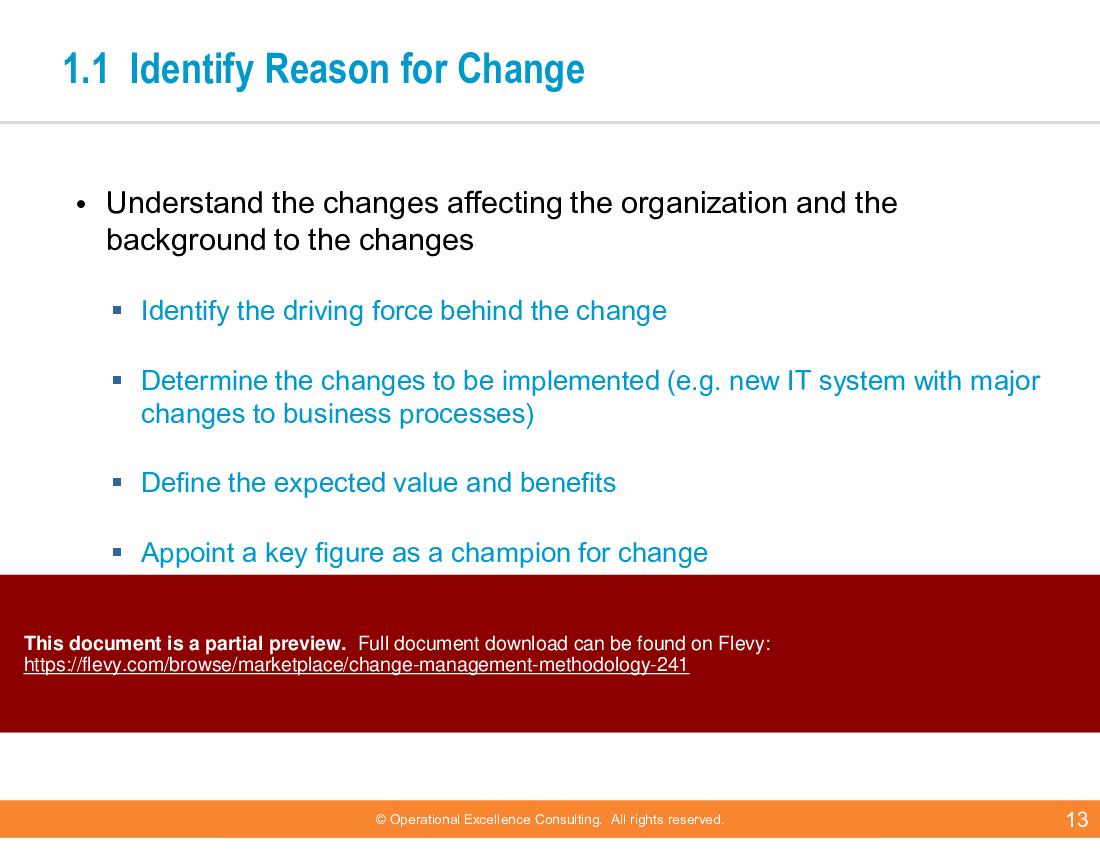
1. Analyze Current Situation: Identifies the reason for change and required changes; analyzes impact, identifies gap and gathers feedback on proposed changes.
2. Plan & Launch Program: Defines change strategy and infrastructure; articulates and defines the entire change process to bridge the gap between "present state" and "desired state".
3. Monitor Progress: Monitors the change transition and transformation process; assesses and measures change effectiveness on people, processes and systems; addresses resistance to change.
4. Evaluate Effectiveness: Reviews results of change process with appropriate follow-up actions; supports culture change; shares success stories and learning points; reward and recognize successful change.
This easy-to-follow methodology is applicable to all types of organizations embarking on organizational transformation such as process and technology improvement, behavioral and cultural change, role and organizational redefinition, mergers and acquisitions as well as the re-imagination of a new workplace in the post pandemic world.
||||||||||||||||||||||||||||||||||||||||||||||||||||||||||||||||||||||||||||||||||||||||||||||||||||||||||||||||||||||||||||||||||||||||||||||||||||||
This methodology package includes:
1. Change Management Methodology (PowerPoint format)
2. Change Management Poster (PDF format, in color and monochrome, printable in A3 size)
||||||||||||||||||||||||||||||||||||||||||||||||||||||||||||||||||||||||||||||||||||||||||||||||||||||||||||||||||||||||||||||||||||||||||||||||||||||
CONTENTS
1. Analyze Current Situation
1.1 Identify reason for change
1.2 Assess readiness for change
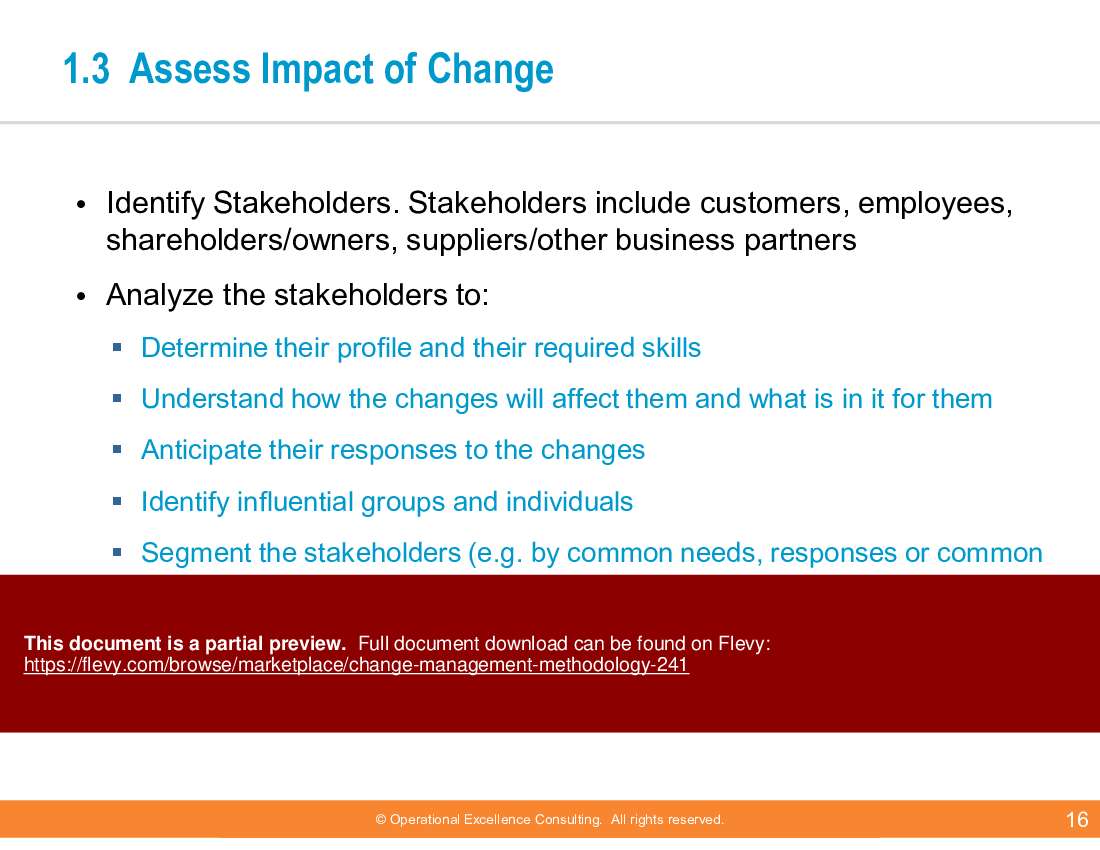
1.3 Assess impact of change
1.4 Identify gaps
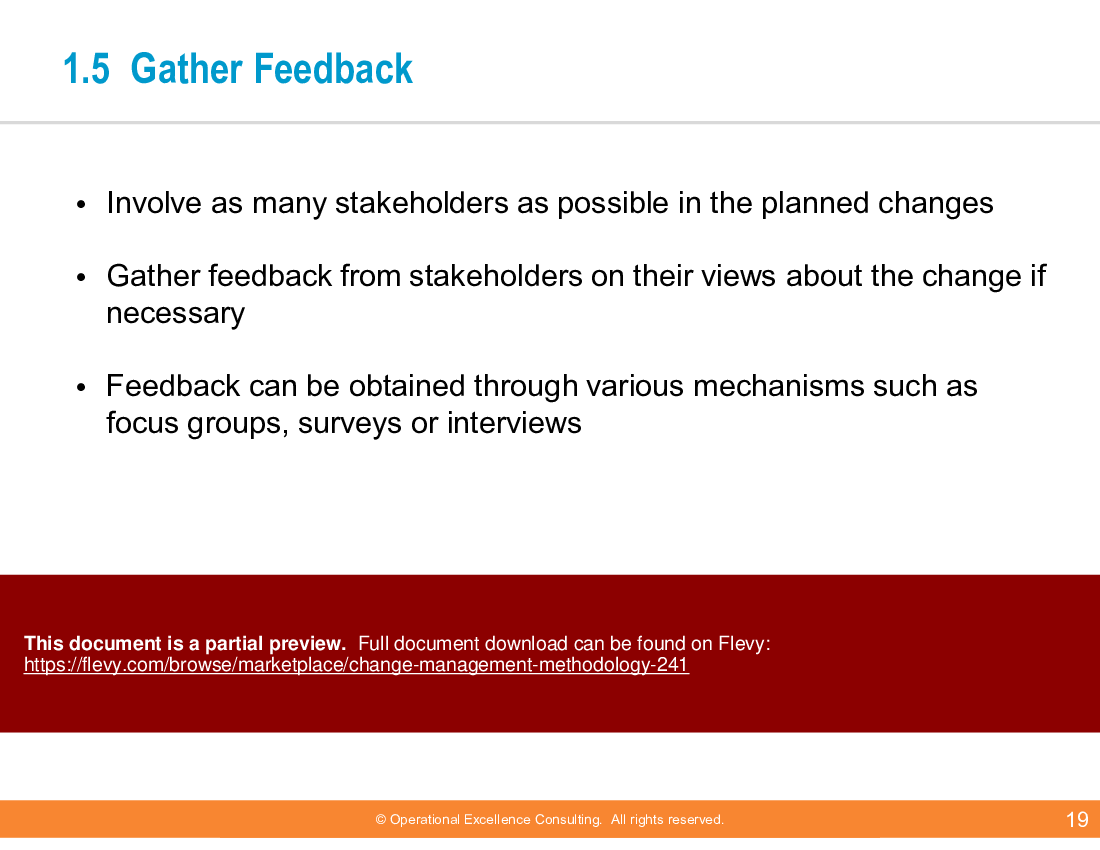
1.5 Gather feedback
2. Plan and Launch Program
2.1 Define change strategy
2.2 Set up change infrastructure
2.3 Create awareness and get buy-in
2.4 Develop and communicate plans
2.5 Develop skills
2.6 Launch pilot project
3. Monitor Progress
3.1 Monitor change process
3.2 Overcome resistance to change
3.3 Audit for behavioral changes
3.4 Measure effectiveness
3.5 Provide support
4. Evaluate Effectiveness
4.1 Review results
4.2 Share success stories
4.3 Provide follow up support
4.4 Reward and recognize
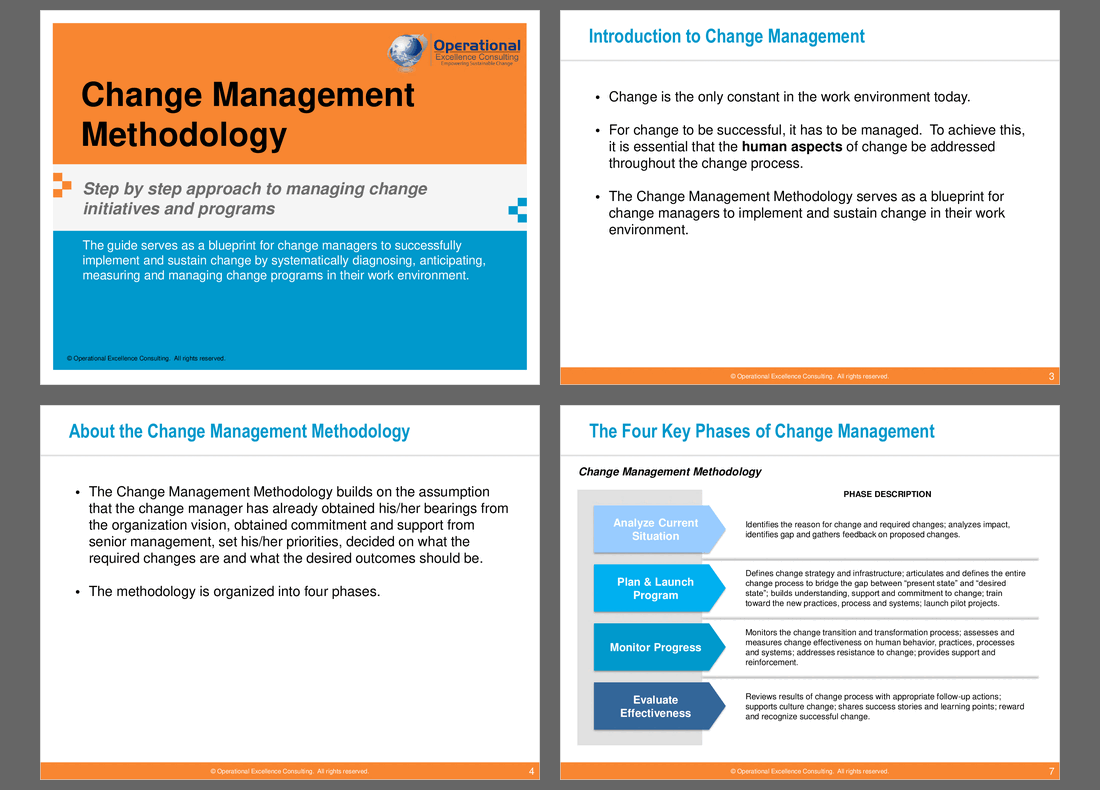
The Change Management Methodology builds on the assumption that the change manager has already obtained his/her bearings from the organization vision, obtained commitment and support from senior management, set his/her priorities, decided on what the required changes are and what the desired outcomes should be. The methodology is organized into four phases.
The methodology emphasizes the importance of identifying the driving force behind the change and determining the changes to be implemented. It also highlights the need to consolidate the training plan, addressing scope, approach, milestones, and resource requirements.
Got a question about the product? Email us at support@flevy.com or ask the author directly by using the "Ask the Author a Question" form. If you cannot view the preview above this document description, go here to view the large preview instead.
Executive Summary
The Change Management Methodology presentation serves as a comprehensive guide for change managers to effectively implement and sustain change initiatives within their organizations. This structured methodology emphasizes diagnosing, anticipating, measuring, and managing change programs, ensuring that the human aspects of change are addressed throughout the process. By following this step-by-step approach, organizations can navigate the complexities of change, enhance stakeholder buy-in, and achieve desired outcomes.
Who This Is For and When to Use
• Change Managers overseeing organizational transformation initiatives
• Project Managers responsible for implementing change programs
• Senior Executives seeking to drive strategic change
• HR Leaders focused on managing the human side of change
• Consultants assisting organizations with change management strategies
Best-fit moments to use this deck:
• During the planning phase of a major organizational change
• When launching new initiatives that require stakeholder engagement
• To train teams on effective change management practices
• For evaluating the effectiveness of ongoing change programs
Learning Objectives
• Define the key reasons for organizational change and desired outcomes
• Analyze the current situation to identify gaps and stakeholder impacts
• Develop a comprehensive change management strategy and infrastructure
• Create awareness and secure buy-in from all stakeholders
• Monitor progress and measure the effectiveness of change initiatives
• Evaluate results and share success stories to reinforce change
Table of Contents
• Introduction to Change Management (page 3)
• Overview of the Change Management Methodology (page 6)
• Phase 1: Analyze Current Situation (page 11)
• Phase 2: Plan & Launch Program (page 22)
• Phase 3: Monitor Progress (page 40)
• Phase 4: Evaluate Effectiveness (page 51)
• Change Management Team Structure (page 67)
Primary Topics Covered
• Analyze Current Situation - This phase identifies the reasons for change, assesses readiness, and gathers stakeholder feedback to understand the impact of proposed changes.
• Plan & Launch Program - Defines the change strategy, sets up the necessary infrastructure, and communicates plans to ensure stakeholder engagement and skill development.
• Monitor Progress - Involves tracking the change process, addressing resistance, and measuring behavioral changes to ensure effective implementation.
• Evaluate Effectiveness - Reviews the outcomes of the change initiative, shares success stories, and provides follow-up support to reinforce the change.
Deliverables, Templates, and Tools
• Change management plan template outlining key activities and timelines
• Communication plan detailing stakeholder engagement strategies
• Training plan for equipping staff with necessary skills
• Measurement tools for assessing change effectiveness
• Feedback mechanisms for gathering stakeholder insights
Slide Highlights
• Visual representation of the 4 phases of the Change Management Methodology
• Key objectives and deliverables for each phase of the change process
• Case studies illustrating successful change initiatives and lessons learned
• Charts and graphs depicting stakeholder impact assessments
Potential Workshop Agenda
Change Management Overview Session (90 minutes)
• Introduce the Change Management Methodology and its importance
• Discuss the 4 key phases and their objectives
• Engage participants in identifying current change initiatives
Stakeholder Engagement Workshop (60 minutes)
• Identify key stakeholders and their roles in the change process
• Develop strategies for effective communication and buy-in
• Create a draft communication plan for upcoming changes
Monitoring and Evaluation Session (90 minutes)
• Review methods for tracking change progress and effectiveness
• Discuss strategies for overcoming resistance to change
• Share success stories and best practices for future initiatives
Customization Guidance
• Tailor the change management plan to reflect specific organizational goals and timelines
• Adjust communication strategies based on stakeholder profiles and preferences
• Incorporate feedback from stakeholders into training materials and sessions
Secondary Topics Covered
• Change management team roles and responsibilities
• Techniques for assessing organizational readiness for change
• Strategies for fostering a culture of continuous improvement
• Tools for measuring employee engagement during change initiatives
FAQ
What is the purpose of the Change Management Methodology?
The methodology provides a structured approach for change managers to implement and sustain change initiatives effectively, ensuring that both organizational and human factors are considered.
How can this methodology help in managing resistance to change?
By involving stakeholders early in the process and maintaining open communication, the methodology helps to address concerns and build buy-in, reducing resistance.
What are the key phases of the Change Management Methodology?
The methodology consists of 4 phases: Analyze Current Situation, Plan & Launch Program, Monitor Progress, and Evaluate Effectiveness.
How can organizations measure the effectiveness of their change initiatives?
Organizations can use various metrics, such as employee engagement surveys, turnover rates, and feedback from stakeholders, to assess the impact of the change.
Is this methodology applicable to all types of organizations?
Yes, the Change Management Methodology is designed to be adaptable and can be applied across various industries and organizational sizes.
What resources are available for implementing this methodology?
The presentation includes templates, tools, and best practices that can be customized to fit specific organizational needs.
How can organizations ensure stakeholder buy-in during the change process?
Effective communication, involving stakeholders in decision-making, and addressing their concerns are essential strategies for securing buy-in.
What role does leadership play in the Change Management Methodology?
Leadership is crucial in providing direction, allocating resources, and modeling the behaviors expected during the change process.
Glossary
• Change Management - The process of managing the transition of individuals, teams, and organizations from a current state to a desired future state.
• Stakeholder - Any individual or group that has an interest in the outcome of a change initiative.
• Resistance to Change - The reluctance of individuals or groups to accept or support changes in their environment or processes.
• Change Strategy - A plan that outlines how change will be implemented, including objectives, timelines, and resources required.
• Pilot Project - A small-scale implementation of a change initiative to test its feasibility before a full-scale rollout.
• Feedback Mechanism - Tools or processes used to gather input and reactions from stakeholders regarding changes.
• Change Management Team - A group of individuals responsible for guiding and implementing change initiatives within an organization.
• Communication Plan - A strategy for ensuring that all stakeholders are informed and engaged throughout the change process.
• Training Plan - A structured approach for providing the necessary skills and knowledge to stakeholders affected by the change.
• Measurement Results - Data collected to evaluate the effectiveness and impact of change initiatives.
• Success Stories - Examples of successful change initiatives that can be shared to inspire and motivate others.
• Organizational Readiness - The extent to which an organization is prepared to implement change initiatives effectively.
Source: Best Practices in Change Management PowerPoint Slides: Change Management Methodology PowerPoint (PPTX) Presentation Slide Deck, Operational Excellence Consulting
This document is available as part of the following discounted bundle(s):
Save %!
Change Management Toolkit
This bundle contains 2 total documents. See all the documents to the right.
Save %!
Change Management Consultant Toolkit
This bundle contains 3 total documents. See all the documents to the right.
|
Download our FREE Organization, Change, & Culture, Templates
Download our free compilation of 50+ slides and templates on Organizational Design, Change Management, and Corporate Culture. Methodologies include ADKAR, Burke-Litwin Change Model, McKinsey 7-S, Competing Values Framework, etc. |